How we deploy.
A staged, evidence-led rollout designed to meet the Victorian Government's Year-1 / Year-3 / Year-5 review cadence set out on p.43 of the 2025–30 strategy.
Facilitation, by design.
REALM Krishi is structured around the Knowing → Planning → Doing facilitation arc set out in the Australia–India AgTech Business Opportunities Report 2026 (Austrade × ThinkAg, Section III, pp.68–72). Each rollout phase below assumes a 12–18 month gestation window for trust-building, contextual adaptation, and institutional co-design — supported by patient, blended capital from a facilitator stack of Victorian Government Trade & Investment, ThinkAg, Austrade South Asia, and Indian incubator and university partners. We treat the report's facilitation thesis as a binding design constraint, not a backdrop.
Facilitation milestones · Knowing → Planning → Doing
The facilitator stack, sequenced.
The Austrade × ThinkAg report (Section III) frames a three-phase facilitation arc — Knowing the context, Planning the entry, Doing at scale. We map each phase to a specific facilitator instrument and a Krishi deployment milestone.
Phase 1 · Knowing (Y1)
Contextual market entry
Cohort onboarding via evokeAG & growAG ecosystem mapping. Field-truth via Austrade South Asia desk, ThinkAg regional partners, and Indian FPO networks.
Pilot MoU signed
Phase 2 · Planning (Y2–3)
Co-creation & soft-landing
GRAFT / PropaGATE (Beanstalk + T-Hub + ThinkAg) soft-landing. RISE (AIM + CSIRO) bilateral R&D scaffolding. Series A blended capital with patient co-investors.
District-scale launch
Phase 3 · Doing (Y4–5)
Institutional alignment at scale
La Trobe Launchpad × BBC & UQ QAAFI joint-research lane. Cicada & Intellecap SSAGA for downstream institutional capital and ecosystem governance.
National platform live
Reference: Austrade × ThinkAg, Australia–India AgTech Business Opportunities Report 2026, Section III (pp.68–72). Instruments named are illustrative of the facilitator stack we are aligned with, not exclusive commitments.
01
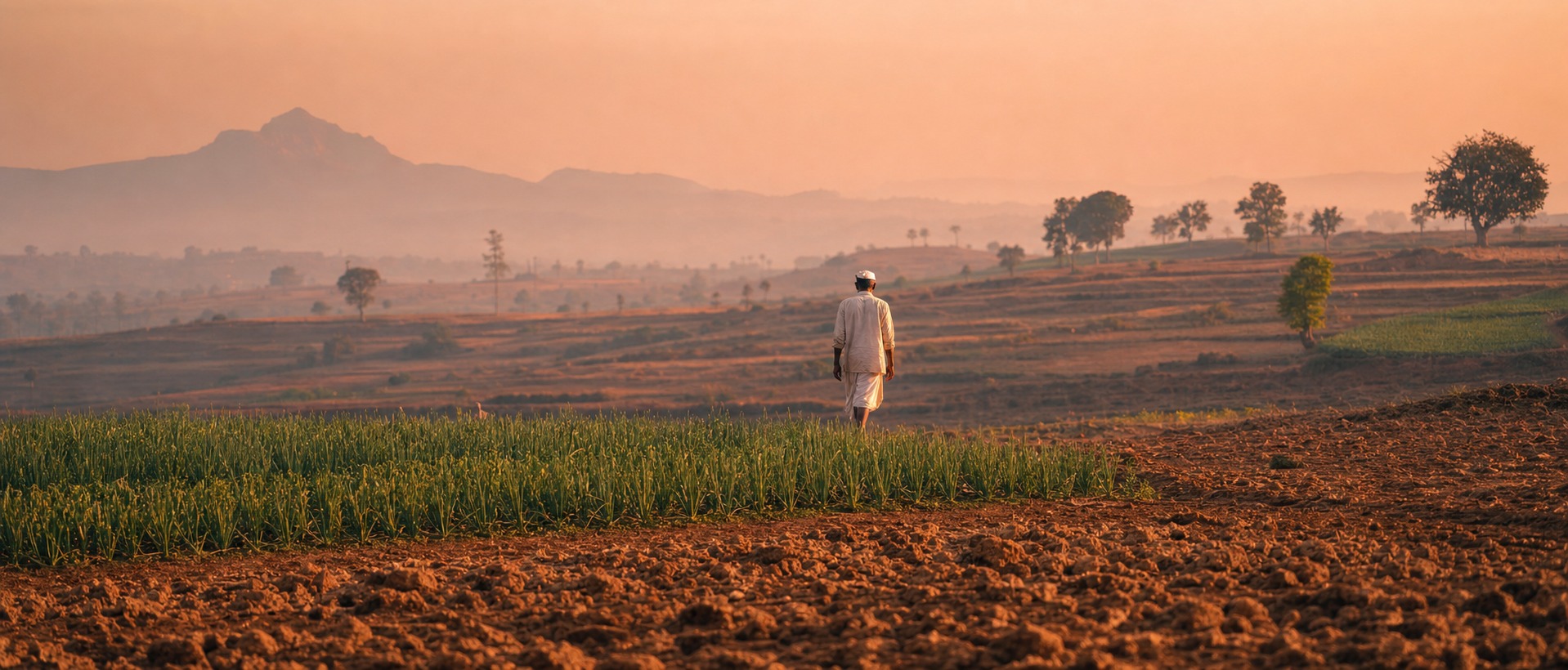
Year 1 — Pilot Cohort (2026)
Partner with 1-2 FPOs across 500-2,000 farmers in Maharashtra or Karnataka. Establish MRV baselines. Harden product. Sign first institutional MoU. Demonstrate proof points to Global Victoria.
Pillar coverage
P1 Precision
P2 Climate
02
Year 2-3 — District Scale (2027-28)
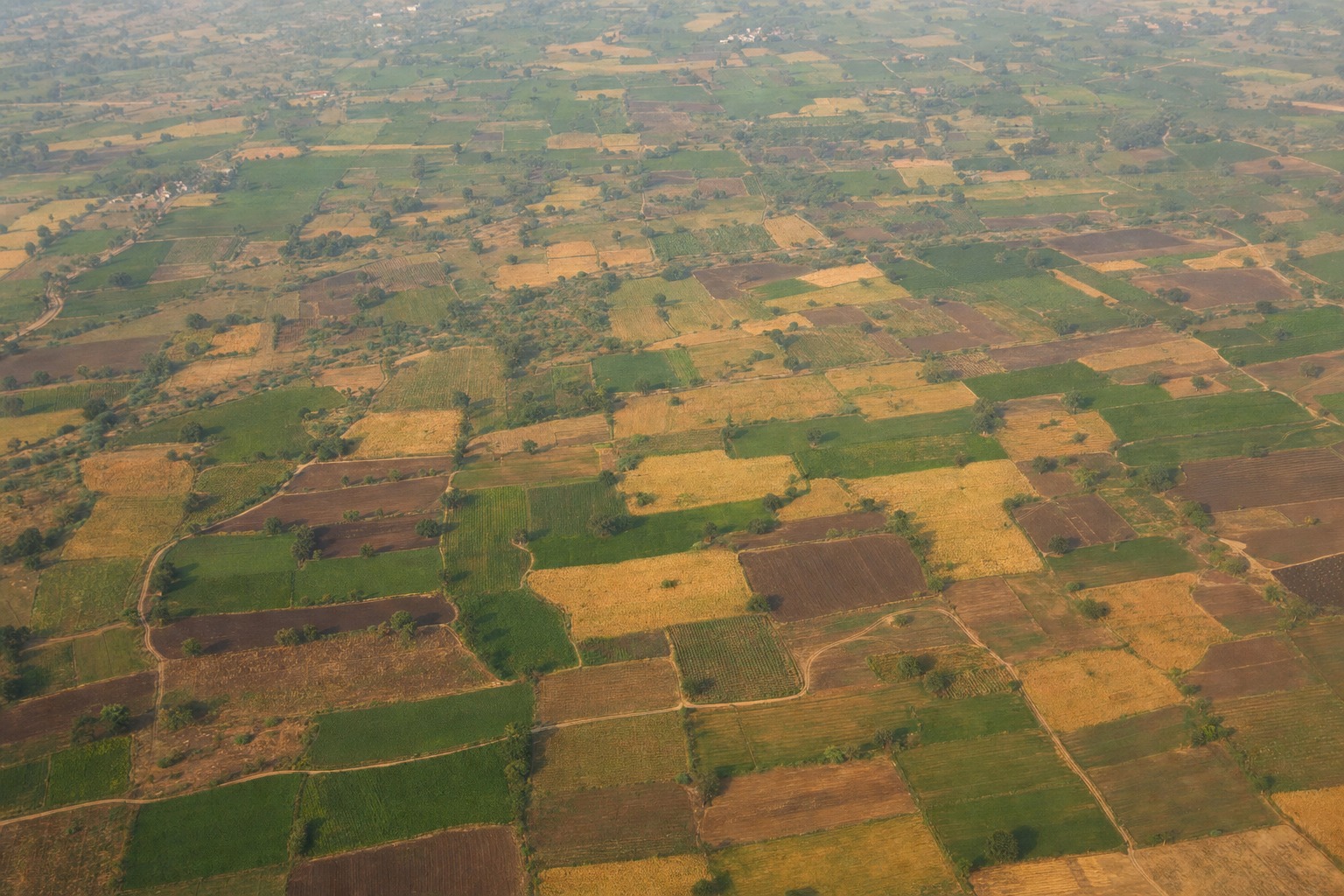
Expand to 5 districts, 50,000 farmers, first carbon-credit issuance, second-state expansion. Series A capital. Embed Victoria–India joint research outputs.
Pillar coverage
P1 Precision
P2 Climate
+ P3 Supply Chain
03
Year 4-5 — National Platform (2029-30)
500,000 farmers across multiple states. Full partner ecosystem operational. Pilot data contributes to the Victorian Government's 2030–35 strategy refresh as a case study of bilateral mutual prosperity.
Pillar coverage
P1 Precision
P2 Climate
P3 Supply Chain
+ P4 AgBio
+ P5 Ag-Allied
Roadmap to five-pillar coverage
From two pillars to five — sequenced, not promised.
Krishi v1 covers Pillars 1 and 2 (Precision AgTech, ClimateAgTech) of the five strategic alliance areas defined by the Austrade × ThinkAg AgTech Report 2026. Pillars 3–5 sequence in across the Y2–5 deployment window, anchored to the FPO logistics footprint (Y2–3), the Bengaluru engineering hub, and the joint-research lane with Australian university partners (Y4–5).
Pillar 1
Precision AgTech
Active Y1+
M01 AI Advisory · M02 Satellite · M05 Weather — shipping from pilot.
Pillar 2
ClimateAgTech
Active Y1+
M03 Climate-Smart · M04 Carbon MRV — first issuance Y2–3.
Pillar 3
AgTech Supply Chain
Y2–3 onboarding
FPO logistics layer, traceability, marketplace primitives — surfaced via M06 as the FPO footprint scales.
Pillar 4
AgBiotechnology
Y4–5 expansion
Sequenced via the Bengaluru engineering hub and the joint-research lane (La Trobe Launchpad, UQ QAAFI).
Pillar 5
Ag-Allied Sectors
Y4–5 expansion
Livestock, dairy, poultry, aquaculture — built on the same advisory + MRV primitives, deployed with Indian cooperatives.